Key Takeaways
| A video ad AI workflow should be chosen by the customer decision it needs to move: attract attention, explain value, prove credibility, or convert interest into action. AI ad creation is rapidly moving inside the media platforms themselves. TikTok expanded Symphony in June 2026, Meta introduced Muse Image and previewed Muse Video in July 2026, and Google added new AI ad transparency controls in July 2026. The tool should not determine the story. TikTok Symphony is useful for platform-native attention, HeyGen for presenter-led explanation, Arcads for UGC-style proof formats, and Creatify for product-to-ad conversion workflows. Independent review evidence should be read carefully. HeyGen and Creatify have mature G2 profiles. Arcads has no meaningful G2 review depth and shows mixed Trustpilot sentiment, so its fit should be judged from workflow testing rather than a marketplace rating. The strongest test adapts one verified business truth across funnel stages instead of generating four unrelated ads. That creates learning the business can reuse. |
|---|
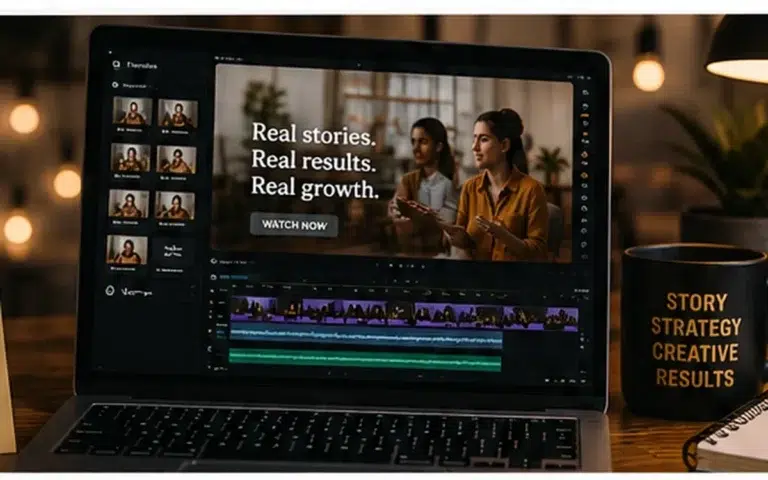
Figure 1. Video ad AI in 2026: match the format to the customer decision before choosing the tool.
Video Ad AI Is Moving From Tool Choice to Decision Design
AI video advertising used to begin with a software question. Which generator should we use? Which avatar looks most realistic? Which model creates the best motion?
That is becoming the wrong first question because the generation layer is spreading across the entire advertising stack.
TikTok expanded Symphony on June 22, 2026 into an end-to-end creative suite that can help brands move from brief to video using text, images, platform signals, avatars, translation and AI-assisted editing. TikTok describes the system as a way to help advertisers ideate, create, edit and export campaign assets inside a platform-native workflow.
Meta followed with Muse Image and Muse Video on July 7, 2026. Muse Video was introduced as Meta’s in-house video generation model with native audio support, and Muse Image is being moved into Advantage+ Creative for advertisers. The direction is clear: creative generation is becoming part of ad delivery, not a separate production island.
Google is normalizing AI on both creation and disclosure. On July 9, 2026, Google announced expanded AI transparency in ads, including a “How this ad was made” section in My Ad Center across Search, YouTube and Discover. Google automatically labels ads made with its own generative AI advertising tools and gives advertisers a control for identifying AI-generated work created elsewhere.
This shift matters for small businesses because the production advantage is shrinking. When TikTok, Meta, Google, Canva and specialist tools can all create video, the harder advantage becomes knowing what the video should do at the exact moment a customer sees it.
Social Scion covered the platform-level version of this change in What Canva Grow 2.0 Means for AI Video Marketing. The same conclusion applies here: faster generation does not replace the decision about what the customer needs to notice, understand, believe or do next.
What Does Video Ad AI Mean?
Video ad AI describes the use of artificial intelligence to plan, create, adapt, edit, personalize, test or distribute video advertising. The AI can generate scripts, avatars, voices, product scenes, B-roll, platform variations, translations, hooks, captions, edits or complete ad concepts.
That broad definition is useful because a video ad can now be produced through several different systems:
- Platform-native AI, where TikTok, Meta or Google creates or adapts the asset inside the advertising environment.
- Avatar and presenter AI, where a synthetic or approved digital twin delivers the message.
- UGC-style AI, where a synthetic presenter imitates the structure of creator or customer-style social content.
- Product-to-video AI, where a product URL, catalog page or uploaded product asset becomes the source for a video ad.
- Generative scene AI, where cinematic or conceptual visuals are created from prompts or reference media.
- AI-assisted editing, where existing video is translated, resized, cleaned, extended or repurposed for multiple ad placements.
The mistake is assuming those formats compete for one job. They do not. A fifteen-second TikTok awareness ad, a forty-five-second service explainer and a conversion-focused product ad sit at different points in the customer decision. The best video ad AI choice depends on that point.
The Video Ad AI Funnel Fit
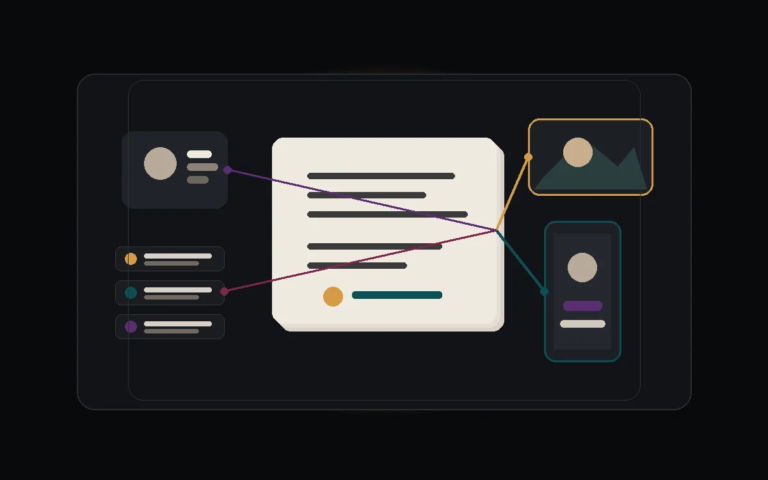
One real business story can travel across the funnel, but the execution should change as the customer question changes. A stranger needs a reason to stop. A curious viewer needs clarity. A skeptical prospect needs proof. A ready buyer needs a reason to choose and act.
Figure 2. The Video Ad AI Funnel Fit: one verified truth can be adapted for attention, explanation, proof and conversion without becoming four unrelated stories.
1. Attract: earn the first three seconds
The audience does not yet need the full argument. It needs a reason to stop. Use a visual pattern break, a customer tension, a surprising observation, a recognizable problem or a clear result. The job is attention with relevance, not attention for its own sake.
2. Explain: make the value easy to understand
Once a viewer is interested, the ad should reduce confusion. A presenter, founder-style delivery, product demonstration or simple visual explanation can help a customer understand what the business does, who it is for and why it matters.
3. Prove: make the claim believable
The proof stage is where AI advertising becomes risky if the business manufactures credibility. Use real review language, actual product behavior, verified results, real process detail or authorized customer evidence. A UGC-style format can feel familiar, but familiarity should not be mistaken for truth.
4. Convert: remove the final decision friction
At the conversion stage, the customer usually needs a specific reason to choose now. Product, offer, price, bundle, availability, guarantee, booking path or another concrete next step becomes more important than a broad emotional idea.
| The funnel rule Do not ask one ad to do every job. Use one verified business truth, then adapt the hook, proof, pacing and call to action for the customer decision in front of it. |
|---|
AI Ad Transparency Is Now Part of Funnel Design
AI labels are becoming more visible at the same time that AI creative is becoming more common. That changes how certain formats should be used.
Google’s July 2026 guidance says advertisers can add AI labels directly to creatives or use the platform’s AI label setting as it rolls out across Google Ads, Display & Video 360, Campaign Manager 360, Merchant Center and Ads Editor. Google Ads disclosure guidance also notes that different jurisdictions can require specific AI disclosures and that using Google’s label controls does not replace the advertiser’s legal responsibility.
For a business owner, the practical implication is not to avoid AI video. It is to avoid building the credibility of the ad around something a viewer could reasonably mistake for direct evidence.
A synthetic presenter can explain a verified service. A generated product scene can illustrate a concept. A platform can create alternate hooks. The higher-risk move is making a synthetic person look like a real customer, showing a generated result as though it physically happened, or allowing the AI to change a product detail that the buyer is evaluating.
Disclosure therefore belongs in the brief before generation begins, especially for proof-stage and conversion-stage ads.
4 Video Ad AI Workflows for Four Different Jobs
The tools below are not ranked from best to worst. They are matched to the job they are strongest at. Product capabilities and pricing were checked against current official pages. Independent review evidence is included only where a meaningful signal exists.
| Workflow | Best funnel job | Current access or pricing | Review signal | Main strength | Main tradeoff |
|---|---|---|---|---|---|
| TikTok Symphony | Attract | Available through TikTok for Business creative workflows; no separate consumer subscription used here | Platform product, not a standalone G2 software review target | TikTok-native trends, generation, avatars, editing and variation inside the channel | Strongest inside TikTok; trend fit does not replace brand truth |
| HeyGen | Explain | Free 3 videos/month; Creator $29/month; Pro $49/month | G2 4.8/5 · 1,589 reviews | Realistic presenters, digital twins, localization and fast script-to-video production | Pricing, credit use and avatar limitations appear repeatedly in reviews |
| Arcads | Prove | Pro Monthly $49.99 with 50 credits; video generation uses 5 credits | No meaningful G2 review depth; Trustpilot sentiment is mixed | Fast UGC-style talking videos and commercial-use workflow | Independent sentiment raises concerns about price, quality consistency and support |
| Creatify | Convert | Free 10 monthly credits; Starter $39/month; Pro $99/month | G2 4.8/5 · 1,403 reviews | Product URL-to-ad, AI actors, batch variation, creative testing and launch workflow | Credit limits, cost and output consistency can require active management |
Figure 3. G2 review signal for the two tools with mature marketplace coverage in this comparison. Arcads is evaluated separately because its G2 profile has no meaningful review depth.
TikTok Symphony: best when the ad must feel native before it feels polished
TikTok Symphony is useful at the attention stage because the production system is built around the platform where the ad will run. The current suite includes ideation, video generation, image generation, avatars, translation and editing. TikTok says Symphony Agent can use brand goals, top-performing ad patterns and current trends to help move from brief to final creative.
The useful part is not that the AI knows what is trending. It is that a business can test a verified message through a format that already behaves like the channel.
Social Scion assessment: use Symphony when the problem is platform translation. A service business may know its customer tension clearly but still need help turning that tension into a TikTok-native opening. Let Symphony change pace, format and creative treatment. Do not let it rewrite the underlying claim.
HeyGen: best when the customer needs explanation
HeyGen belongs in the middle of the funnel because its strength is controlled delivery. Its current pricing page offers a free plan with three videos per month, Creator at $29 per month and Pro at $49 per month. The platform supports stock avatars, digital twins, voice cloning, translation and script-to-video workflows.
The HeyGen G2 profile currently shows 4.8/5 from 1,589 reviews. Recurring positive themes include ease of use, realistic avatars, quality, lip sync and faster video creation. Pricing and avatar limitations are among the most repeated negatives.
Social Scion assessment: HeyGen is strongest when the message is already clear and the bottleneck is recording it repeatedly. It can explain a service, product, process or offer consistently. It should not become the reason a business turns every ad into a talking head.
Arcads: best when the proof format needs a UGC-style delivery
Arcads is positioned around AI actors, talking avatars and marketing video that mimics the structure of creator-led or UGC-style advertising. Its current pricing page lists Pro Monthly at $49.99 with 50 credits. Video generation uses five credits, and commercial use is allowed under the current plan description.
The review evidence needs more caution than the vendor copy. Arcads has a G2 seller profile with no meaningful review depth, so there is no dependable G2 consensus to use. Trustpilot currently shows mixed sentiment, with positive comments around ease and talking-video capability, alongside repeated complaints about price, inconsistent output quality, credit economics and support. Trustpilot is a different review environment from G2, so that signal should be treated as directional rather than directly comparable.
Social Scion assessment: Arcads can be useful when the ad needs the rhythm and familiarity of UGC without organizing repeated creator shoots. The proof itself must still be real. Do not manufacture a fake first-person customer experience just because the format makes it easy.
Creatify: best when the customer is close to a product decision
Creatify is the most conversion-oriented workflow in this comparison. It can turn a product URL into video ads, use AI actors, generate product visuals, create batches of variations, analyze creative performance and launch ads to supported channels.
Its current pricing page includes 10 monthly free credits, Starter at $39 per month with 100 credits and Pro at $99 per month with 300 credits. The Pro plan includes a larger AI actor library, more ad templates, competitor tracking, ad launching and team collaboration.
The Creatify G2 profile currently shows 4.8/5 from 1,403 reviews. Review themes strongly favor ease, speed, output quality, time savings and realistic avatars. Credit limitations, cost and the need for further editing appear among recurring negatives.
Social Scion assessment: Creatify is a good fit when the product, offer and source assets already exist and the main job is turning those inputs into testable conversion creative. If the business is still unsure what the offer should say, the platform is being asked to solve the wrong problem.
The Myth: The Best Video Ad AI Tool Is the One That Makes the Most Ads
Volume is useful only when each new ad creates information.
Twenty unrelated AI ads can produce more creative and less learning. A business may discover that one version performed better without understanding whether the improvement came from the hook, presenter, product angle, proof, offer, format or audience.
The stronger use of AI is controlled variation. Keep the customer truth fixed. Change the hook. Keep the proof fixed. Change the presenter. Keep the offer fixed. Change the opening visual.
That makes the AI system a testing engine instead of a content machine.
The goal is not to generate the largest number of assets. It is to discover the smallest number of repeatable creative truths that improve the next campaign.
How to Build a Video Ad AI Test Across the Funnel
1. Start with one verified customer truth
Choose a real fact that deserves to travel through the campaign. It might be a customer problem, measurable result, product detail, founder insight, review pattern or service experience. Do not start with four different ad ideas.
2. Write the attention version
Turn the truth into a three-second reason to stop. Use a tension, surprise, visual contrast, question or result. The awareness ad does not need to explain everything.
3. Write the explanation version
Add the missing context. What does the business do? How does it work? Who is it for? Why is the customer problem being solved differently? A presenter, founder voice or product demo can work well here.
4. Write the proof version
Add the evidence. Use real review language, product behavior, verified numbers, process detail, authorized customer material or another fact that makes the claim harder to dismiss.
5. Write the conversion version
Make the choice clear. What does the customer get? What happens next? What is the offer, booking action, product page, bundle, trial or other specific step?
6. Match the tool after the versions exist
Choose Symphony, HeyGen, Arcads, Creatify or another tool because its production strength matches the version you need to create. Do not redesign the funnel around the software.
7. Change one variable per test
If you are testing hooks, keep the proof, body and CTA stable. If you are testing presenters, keep the script stable. The closer the variation is controlled, the more useful the learning.
8. Check disclosure and evidence before launch
Review current platform rules, synthetic-person use, product accuracy, claims, captions and any AI labeling requirement before the ad is published.
9. Measure the action that belongs to the stage
Use attention metrics for awareness, qualified engagement for explanation, trust or lead quality for proof, and conversion metrics for the final decision. Do not force every creative stage to optimize for the same signal.
10. Feed the learning into the next story
Write down which hook, proof, customer language and format improved the response. That insight should become part of the next campaign brief instead of disappearing when the ad set ends.
Practical Prompt: Turn One Business Truth Into Four Ad Jobs
| Use verified business information only Using only the verified business information below, create four video ad briefs from the same underlying truth. Brief 1, ATTRACT: create a 10 to 15 second attention ad. The job is to make the right customer stop. Brief 2, EXPLAIN: create a 20 to 30 second explainer. The job is to make the value easy to understand. Brief 3, PROVE: create a 20 to 30 second proof ad. The job is to make the claim believable using only supplied evidence. Brief 4, CONVERT: create a 15 to 30 second conversion ad. The job is to make the offer and next action clear. Keep the core customer truth consistent across all four. Do not invent testimonials, product results, prices, guarantees, founder history, customer emotions, statistics or product capabilities. If evidence is missing, mark it [NEEDS SOURCE]. For each brief provide: hook, visual format, script structure, proof, CTA, recommended AI production workflow and the single customer decision being moved. Verified information: [paste source]. |
|---|
When Should You Pay for a Video Ad AI Tool?
Pay when the platform removes a repeated production constraint after the message and funnel job are already clear.
- You repeatedly need new ad variants from the same approved product, service or offer.
- UGC-style creator shoots are too slow or expensive for the number of iterations your campaign requires.
- You need multilingual presenter ads without recording every market separately.
- A product catalog or ecommerce page can feed a repeatable product-to-video workflow.
- The paid plan removes watermarks, adds batch generation, commercial controls, brand spaces, custom avatars, higher resolution or collaboration that the live campaign needs.
- You can measure the number of usable ads, hours saved or test cycles gained from the subscription.
Stay on a free or lower tier when the business is still testing the format itself. There is little value in buying volume before one version of the message has earned the right to scale.
The most useful cost calculation is not credits per month. It is usable ads per month multiplied by what those ads help the business learn or convert, minus generation, correction and media costs.
Common Video Ad AI Mistakes
Starting with the tool instead of the customer decision
A generator can produce a polished asset before the business has decided whether the ad should attract, explain, prove or convert. That produces activity without a clear job.
Using UGC style as a substitute for real proof
A familiar phone-camera format can feel credible, but credibility should come from the evidence, not from imitating the visual language of a customer testimonial.
Letting AI alter the product
Generated scenes and transformations can subtly change packaging, product proportions, colors, interfaces or behavior. Review every product detail before the ad becomes a buying reference.
Scaling one message across every funnel stage
The same customer truth can travel across the funnel, but the information density and CTA should change. An awareness ad and a conversion ad should not be identical cuts with different buttons.
Changing too many variables at once
If the hook, avatar, proof, script, music, offer and CTA all change together, the business loses the ability to learn why a version worked.
Ignoring AI labels until publishing
Google and other platforms are expanding AI disclosure systems. Disclosure should be part of the brief when realistic synthetic content is being created, not a cleanup step after export.
Buying for feature count
A specialist that solves one repeated bottleneck can create more value than an all-in-one tool whose extra functions never enter the workflow.
Measuring only click-through rate
An awareness ad can create attention without producing immediate sales. A proof ad can improve lead quality. Match the measurement to the customer decision the creative was built to move.
FAQ: Video Ad AI in 2026
What is video ad AI?
Video ad AI is the use of artificial intelligence to plan, generate, edit, adapt, personalize, test or distribute video advertising. It can include AI avatars, product-to-video, generated scenes, platform-native creative, translation and automated variation.
What is the best AI tool for video ads?
The best tool depends on the funnel job. TikTok Symphony fits platform-native attention, HeyGen fits presenter-led explanation, Arcads fits UGC-style synthetic delivery, and Creatify fits product-to-ad conversion workflows.
Can AI create a full video ad from a product link?
Yes. Creatify can turn supported product URLs into video ad workflows, and other platforms are adding similar product-driven generation. The output should still be checked for product accuracy, claims and brand fit.
Can AI make UGC video ads?
Yes. Tools such as Arcads and Creatify can create UGC-style or avatar-led ad formats. A UGC-style execution should not falsely imply that a synthetic actor is a real customer giving first-person evidence.
Can I make video ads with AI for free?
Several tools offer free access. HeyGen allows three free videos per month, and Creatify includes 10 free monthly credits. Platform-native systems such as TikTok Symphony may also be available through the advertising workflow without a separate creator subscription.
Are AI video ads labeled?
AI labeling depends on the platform, location and type of generated content. Google expanded AI ad transparency in July 2026 and introduced advertiser controls for labeling AI-generated or edited assets. Check the current rules before publishing.
Do AI video ads perform better?
There is no universal performance advantage. AI is valuable because it can reduce production cost and increase controlled creative testing. Results still depend on the offer, audience, proof, creative execution and media conditions.
Should a local service business use AI video ads?
Yes, when the ad uses real service truth and the format matches the customer decision. A service business can use AI to create a short awareness film, explain a process, animate real review language or create offer variations without staging a full shoot.
How many AI ad variations should I test?
Start with a small controlled set. Three hook variations around the same proof and CTA often teach more than ten unrelated concepts because the business can see which change affected the response.
Can AI replace an advertising agency or creative strategist?
AI can replace or reduce specific production tasks. It does not automatically know the business story, positioning, customer psychology, evidence standards, offer strategy or interpretation of why one creative result should change the next campaign.
The 2026 Stance: Video Ad AI Is Becoming Infrastructure. Customer Understanding Is Not.
The advertising platforms are absorbing more of the production process. Specialist tools are adding agents, actors, templates, trend signals, batch generation, ad launching and performance data. It is becoming possible to move from product page to multiple video ads without touching a camera.
That is useful. It also makes the strategic layer easier to confuse with the production layer.
A platform can generate a hook. It does not automatically know which customer tension your business has earned the right to speak about. It can create a convincing presenter. It does not know which proof the buyer should trust. It can generate variations. It does not know whether the campaign is learning anything.
The scarce advantage is not more video. It is a clearer model of the customer decision.
Know what the stranger needs to notice. Know what the interested customer still does not understand. Know what the skeptic needs to believe. Know what the ready buyer needs before acting. Then give AI the production job that fits that moment.
That is how video ad AI becomes a business system instead of another content subscription.
The Generator Should Not Be the First Place Your Ad Finds Its Story
Most businesses already have stronger ad material than they realize: a repeated customer question, a real result, a founder belief, a useful product detail, a review pattern or a moment competitors cannot copy.
Social Scion AI starts by locating that truth and deciding which customer decision it should move. The cinematic, avatar, UGC, product or AI-native production format comes after.
| Get your Free Film See what happens when the real business story becomes the source before the AI ad workflow begins. Claim the Free Film Your story works while you work. |
|---|

0 conversations