Key Takeaways:
- Canva, Google, and Meta all shipped AI ad generation and video features within about a year of each other: Canva Grow 2.0 (June 25, 2026), Google Ads Asset Studio’s Veo and Gemini Omni updates (rolled out through early 2026, expanded May 20, 2026), and Meta’s Muse Image and Muse Video going into Advantage+ Creative (July 7, 2026).
- AI video marketing is shifting from a separate tool a business has to go find and pay for, to a feature already sitting inside software most small businesses already use for design, search ads, or social ads.
- That shift lowers the cost of producing an ad. It does not lower the cost, or replace the need, of knowing what the ad should actually say about your business.
- For a business owner, the practical decision this week isn’t which platform’s AI is “best,” it’s whether you have a documented story and message to feed into whichever tool you already have access to.
Why This Matters for Business Owners
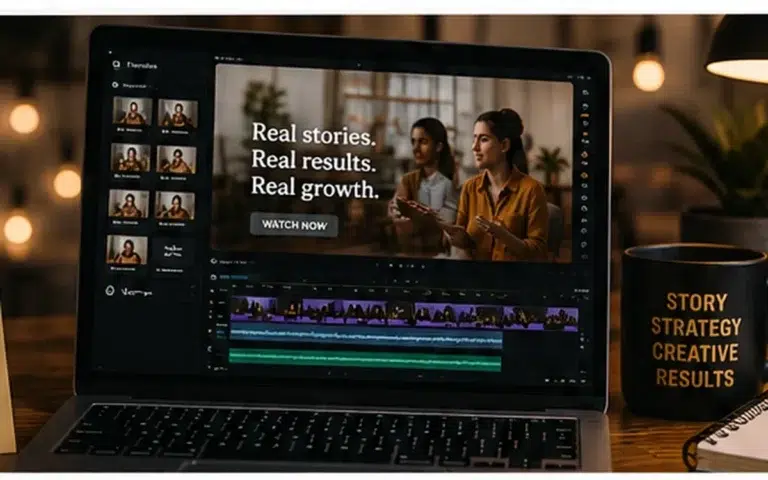
Canva added AI ad creation and cross-platform publishing to Grow 2.0 on June 25, 2026. Two months earlier, Google folded Veo video generation and Gemini Omni into Ads Asset Studio. Six weeks after Canva’s move, Meta shipped its first in-house media models, Muse Image and Muse Video, straight into Advantage+. Three platforms, one pattern: AI video marketing is no longer a separate tool you go find. It is a checkbox inside software you already pay for.
That is convenient. It is not the same thing as a strategy.
What Canva Grow 2.0 Actually Added
Canva Grow 2.0, reported by MediaPost on June 26, 2026 (citing The Verge’s original coverage), lets users build ad campaigns and publish AI-generated static and video ads directly to TikTok, LinkedIn, and Meta without leaving Canva. A new performance-insights dashboard tracks how those ads do once they are live, closing the loop between design and results inside a single interface.
For a small business already using Canva for social graphics, this removes a real piece of friction. There is no export, no separate ad platform login, no second tool to learn. The ad gets built and published from the same screen where the flyer or Instagram carousel already gets made. Social Scion AI covered a similar platform-level shift earlier this year in what Google and A24’s AI filmmaking deal means for small businesses; the pattern is the same each time a major platform absorbs a capability that used to require a separate vendor.
Is a Bundled AI Ad Feature the Same as an AI Video Marketing Strategy?
The question this raises is not whether Canva, Google, and Meta can generate a video ad. They clearly can, and increasingly fast. The question is whether “AI video marketing” bundled into a platform you already use replaces the work of figuring out what your business should actually say, or just gives you a faster way to publish content that still has nothing specific to say.
Three platforms adding nearly identical AI ad generation within about a year of each other is not a coincidence. It is a sign the underlying generation technology has become commoditized. What has not become commoditized is the story behind the ad, the specific belief, proof, or transformation a business is actually trying to communicate. A tool that generates video faster does not generate a reason for someone to care about it faster. That part still has to be worked out first, regardless of which platform eventually renders the footage. This is the same adoption-versus-satisfaction gap Social Scion AI has written about with AI video ads more broadly: businesses are adopting these features fast, but adoption and results are not the same measurement.
Four AI Video Marketing Tools Researched and Compared
The AI video marketing tools below were researched and compared using each platform’s own product documentation and official announcements for capability and pricing claims, cross-checked against their listings on theresanaiforthat.com and independent trade coverage for adoption context and user sentiment. None of these tools were hands-on tested for this article; every capability claim is sourced to the platform’s own materials, and every strength or limitation is sourced to a named third party.
| Tool | Type | What It Actually Does | Verification Status |
|---|---|---|---|
| Canva Grow 2.0 | Platform-native | AI ad generation plus direct publishing to TikTok, LinkedIn, and Meta from inside Canva, with a built-in insights dashboard | Parent “Canva” listed on theresanaiforthat.com; Grow 2.0 has no distinct listing yet |
| Google Ads Asset Studio | Platform-native | AI image and video generation (Veo, Gemini Omni) built into Google Ads, with style references and cross-channel ad previews | No distinct theresanaiforthat.com listing found; built-in Google Ads feature, not an indexed third-party tool |
| Meta Advantage+ Creative (Muse Image / Muse Video) | Platform-native | Automatically generates and personalizes ad variants inside Meta Ads Manager, now powered by Meta’s own in-house Muse models | Muse Image is listed on theresanaiforthat.com |
| AdCreative.ai | Dedicated tool | Standalone AI ad-creative generator built specifically for paid social and search, including dedicated video ad formats | Confirmed listed on theresanaiforthat.com |
Google Ads Asset Studio launched September 10, 2025 as a general creative hub inside Google Ads, then added Veo-powered video generation through early 2026, and Gemini Omni integration was announced at Google Marketing Live on May 20, 2026, per Search Engine Land’s coverage of the event. Meta’s contribution came later and from a different direction: Meta Superintelligence Labs launched Muse Image on July 7, 2026, its first media generation model built entirely in-house rather than licensed from Midjourney or Black Forest Labs, with Muse Image rolling into Advantage+ Creative for advertisers.
AdCreative.ai is the one tool here that was not built by a platform a business already uses for something else. It is a dedicated ad-generation product, priced from $20 to $999 a month depending on billing term, with video ad formats included at its Pro tier. User sentiment tracked on theresanaiforthat.com (AdCreative.ai listing) generally credits it with fast output for paid social creative at scale, though some listed feedback flags that its video customization is more limited than a purpose-built video editor, a tradeoff worth weighing against the convenience of the platform-native options above.
All four AI video marketing approaches skip the same step. None of them ask what a business’s actual story is before generating an ad about it. That is the gap Social Scion AI works from directly, starting with the Locate and Express phases of the LEADS framework before any tool, platform-native or otherwise, gets involved in producing the finished asset.
How to Use These AI Video Marketing Tools Without Wasting Spend
A business does not need to pick a side in the AI video marketing platform-versus-dedicated-tool debate to get more out of any of these options this week.
- Before opening any of these tools, write down the one thing your business wants a specific customer to believe after watching the ad. If that sentence does not exist yet, no AI generator fixes that problem, it only produces content faster around the absence.
- If you already pay for Canva, try Grow 2.0 for a single campaign before evaluating a separate ad tool. The value of Grow 2.0 is largely in the workflow (build and publish without switching tools), so it is worth testing on real budget before adding another subscription.
- If most of your spend already runs through Google Ads, test Asset Studio’s video tools on an existing high-performing campaign first, rather than a brand-new one, so you have a real performance baseline to compare against.
- Treat Meta’s Muse-powered Advantage+ Creative features as default-on, not optional, since Meta has been turning creative enhancements on by default for new Sales, Leads, and App Promotion campaigns since February 2026. Check your account settings directly rather than assuming they are off.
- If you’re evaluating a dedicated tool like AdCreative.ai instead of a platform-native option, ask specifically about video customization limits before committing to an annual plan, since that has been a flagged tradeoff versus purpose-built video tools.
- Whichever tool you use, keep one document with your business’s core story, proof points, and voice, and paste from it into every one of these generators. That single habit does more for ad performance than the choice of tool.
Frequently Asked Questions
Is Canva Grow 2.0 free to use? Canva Grow 2.0 builds on Canva’s existing plans; ad generation and publishing features are part of the Grow 2.0 rollout announced June 25, 2026, though specific tier requirements should be confirmed directly in your Canva account, as availability by plan can change during rollout.
Do I need Google Ads Asset Studio and Meta Advantage+ Creative, or just one? Most small businesses run ads on more than one platform, so the more useful question is whether your story and creative direction stay consistent across both, not which single tool to standardize on. Both are already built into ad accounts you likely have active.
Is AdCreative.ai worth paying for if I already have Canva or Google Ads? It depends on whether your AI video marketing needs dedicated, high-volume ad variant testing across formats that a general design or ad platform doesn’t handle as deeply. For a business running one or two campaigns at a time, the platform-native tools above may cover the need without an added subscription.
Does using AI-generated video ads hurt trust with customers? That depends more on whether the ad has something specific and true to say than on which tool generated it. A generic AI-generated ad and a generic traditionally-produced ad have the same trust problem: nothing to say, said faster.
What should a small business do before trying any of these tools? Write down the specific belief, proof, or transformation the ad needs to communicate. Every tool compared here generates footage well. None of them generate that sentence for you.
Your Next Step
Three platforms just made AI video marketing a built-in feature instead of a separate purchase decision. That makes the tool question easier and the story question more important, not less. Social Scion AI starts with the Locate phase of the LEADS framework before any platform, AI-native or otherwise, gets involved in production, the same starting point covered in why visual storytelling is the real growth lever for small business. Get your Free Film and build the story these tools will actually be generating ads about.

0 conversations