Key Takeaways
|
An AI video ad should be treated as a controlled creative test, not a prompt contest. Keep the underlying customer truth, proof and offer stable while changing one variable such as the hook, presenter, opening visual, pace or placement. Google's August 27 Demand Gen update made Multimodal Video Creation generally available, moving storyboarding and horizontal or vertical video creation into one paid-media workflow. Google also auto-generates shorter and vertical variants, which increases the need to define what must not change before automation begins. TikTok Symphony is moving from generation toward a creative supply chain that connects trend signals, creative planning, AI production and export. Creatify is moving further toward ad operations with Agent, Ad Flow, launch tools and performance guidance. The useful performance question is not whether an AI video ad looks realistic. It is whether the variation teaches the business something about the audience and improves the action the campaign was designed to create. The safest workflow separates business truth from synthetic execution. AI can change the hook, visual treatment, presenter or format. It should not invent testimonials, product results, prices, guarantees or customer evidence. |

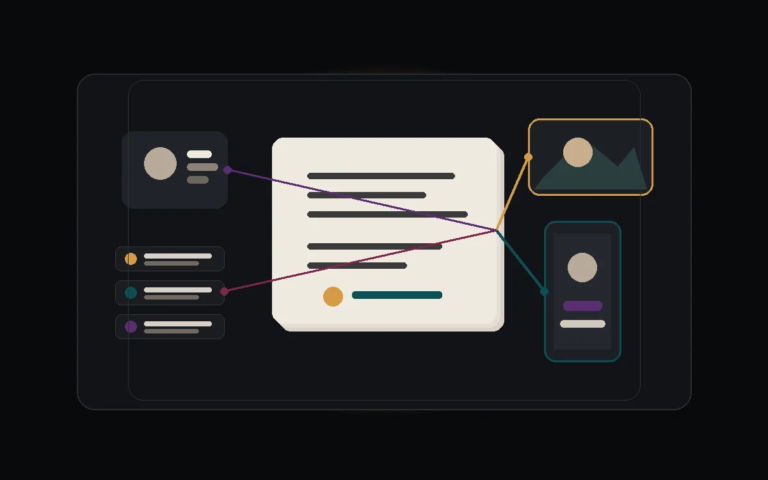
Figure 1. The controlled AI video ad test: keep the business truth stable and change one creative variable at a time.
AI Video Ads Are Moving From Production Into the Media System
The AI video ad market is changing in a way that makes the creative strategy more important, not less.
On August 27, Google made Multimodal Video Creation generally available in Demand Gen. Advertisers can move from storyboarding to horizontal and vertical video assets inside Asset Studio, then use those assets across Demand Gen inventory.
Google's current Demand Gen creative-enhancement guidance goes further. Video enhancements are enabled by default for new campaigns and can create vertical versions, square versions and shorter edits designed to improve the first five seconds. Auto-generated video ads can also build multiple orientations from supplied text, images and brand guidelines.
That is useful production automation. It also creates a new risk: the platform can create more creative before the business has clearly decided what the creative is supposed to teach.
TikTok is solving the same problem from the social side. TikTok Symphony Agent connects trend discovery, creative insights, script development and finished video production. TikTok's broader Symphony Creative Suite is positioned as an end-to-end environment for ideation, creation, editing and export.
Creatify is moving even closer to a full advertising workflow. Its current platform includes Agent, Ad Flow, product-to-video, AI actors, ad launching and performance-oriented tools. Creatify's pricing page shows Starter at $39 per month with 100 credits and Pro at $99 per month with 300 credits, plus broader actor libraries, premium models, templates and ad tools.
The pattern is consistent across the category: production is being absorbed into the ad system. The differentiator moves upstream to the source story and downstream to the learning process.
Social Scion made the same point in What Canva Grow 2.0 Means for AI Video Marketing: when generation becomes a feature inside software the business already uses, the strategic advantage shifts away from access to the tool and toward the quality of the message fed into it.

Figure 2. Four 2026 signals showing AI video ads moving from isolated generation toward integrated planning, production and testing.
What Is an AI Video Ad?
An AI video ad is a paid-media or promotional video in which artificial intelligence creates or materially transforms part of the production. AI may generate the script, presenter, voice, scene, product motion, B-roll, edit, translation, aspect-ratio variation or complete video.
The useful distinction is not AI versus non-AI. It is evidence versus execution.
Execution can be synthetic. A product shot can be animated. A presenter can be generated. A horizontal ad can become vertical. A hook can be rewritten into three versions.
Evidence should stay verified. The customer quote, product capability, price, guarantee, result, founder claim and offer should come from the business, not from the model.
AI video ad vs. AI-generated video
An AI-generated video may exist without a campaign, offer or measurable next action. An AI video ad is a business asset. It needs an audience, a proposition, evidence, a media placement and a conversion or learning goal.
AI video ad vs. UGC-style AI video
UGC-style AI video is one ad format, not the whole category. It can use a synthetic presenter to deliver a product message, but an AI video ad can also be cinematic, product-led, animated, documentary-style or built from real customer footage with AI-assisted editing.
The 5 Controlled Tests That Make AI Video Ads Useful
1. Hook test: change only the reason to stop
Keep the product, proof, body copy and CTA the same. Change the first three seconds. One version can open with the customer pain. Another can open with the outcome. Another can open with a visual contradiction. This tells you what earns qualified attention without changing the whole argument.
2. Presenter test: change only who delivers the message
Keep the script fixed and compare a founder-style digital twin, a synthetic presenter, a voiceover-only product ad or a real spokesperson. This is useful when the business needs to know whether identity, authority or relatability affects response.
3. Proof test: change only the evidence
Keep the hook and offer stable. Compare a product demonstration, a real customer quote, a measurable result, a before-and-after process or another verified proof point. This reveals what the audience needs in order to believe the claim.
4. Format test: change only how the story is packaged
Use the same truth in a 15-second vertical cut, a 30-second product explainer and a more cinematic version. The story should remain recognizable. The test shows whether the audience responds to speed, explanation or emotion.
5. CTA test: change only the requested action
Keep the creative body stable and test the next step. Shop now, see how it works, claim the free film, book a consultation or another action can create very different behavior even when the video itself is unchanged.
|
The controlled-test rule If the hook, presenter, proof, offer, visual style and CTA all change at once, the business can discover a winner without discovering why it won. |
What Google Is Signaling About AI Video Ad Performance
Platform performance claims should be treated as directional evidence because the platforms have a commercial reason to encourage broader creative adoption.
Even with that caveat, Google's current Demand Gen guidance gives a useful signal. Google says advertisers using both video and image assets in Demand Gen saw 20% more conversions at the same cost per action than advertisers using video assets only. The point is not that a specific format automatically wins. The delivery system benefits from more useful creative coverage.
Google also gives advertisers creative-level controls for in-stream, in-feed and Shorts placements. Demand Gen creative preferences let advertisers choose which video appears in which format, which matters because the same ad should not always be cropped into every placement.
The practical interpretation is simple: create intentional variants before allowing the platform to automate additional ones.
3 AI Video Ad Workflows Worth Comparing
|
Workflow |
Best for |
Current cost signal |
Review signal |
Strength |
Tradeoff |
|---|---|---|---|---|---|
|
Google Demand Gen + Asset Studio |
Advertisers already buying Google visual media |
No separate creative subscription |
Platform feature, not a standalone G2 product |
Storyboarding, auto-generated variants, placement controls and direct media handoff |
Automation can multiply weak creative if the source message is not locked |
|
TikTok Symphony |
TikTok-first ad ideation and production |
Used inside TikTok for Business creative workflow |
Platform suite, not a standalone G2 software profile |
Trend-aware planning, scripts, generation, editing and TikTok-native output |
Trend fit can become gimmick if the brand truth is weak |
|
Creatify |
Product-to-ad creation and high-volume creative testing |
Free 10 credits; Starter $39/month; Pro $99/month |
G2 4.8/5 · 1,707 reviews |
URL-to-video, actors, Agent, Ad Flow, launch tools and performance guidance |
Credits and dynamic workflows can become expensive when prompts or iterations are complex |

Figure 3. Creatify has mature independent review depth; Google Demand Gen and TikTok Symphony are platform features rather than standalone G2 software products.
Google Demand Gen: best when creative testing and distribution should stay together
Google is the most integrated option here because the creative is being created inside the media environment. Asset Studio, auto-generated video, creative preferences and enhancements all reduce the distance between approved source material and placement-ready variants.
Social Scion assessment: use Google after the story, proof and offer are approved. Let the platform help with format adaptation, not with inventing the business proposition.
TikTok Symphony: best when the platform culture is part of the creative problem
TikTok Symphony is valuable when the business already knows what it wants to say but needs help making the execution feel native to TikTok. Symphony Agent can use trend patterns and platform signals to shape ideas and finished creative.
Social Scion assessment: let Symphony adapt rhythm, hook and visual language. Do not let the latest trend replace the customer problem.
Creatify: best when product-to-ad production is the repeated bottleneck
Creatify is the most specialist advertising platform in this comparison. Its current credit documentation says standard video ads use five credits per 15 seconds, while dynamic tools such as Agent, Ad Flow and Ad Clone use variable credits based on prompt complexity, generation attempts and processing resources.
That is an important buying detail because the price of an AI ad is not the subscription divided by the number of renders. It is the cost of the approved creative after failed generations and revisions.
The Creatify G2 seller profile currently shows 4.8/5 across 1,707 reviews. Recent reviewers continue to praise fast video creation, ease and time savings. The platform's own product positioning emphasizes creative testing and performance workflows, so the strongest use case is repeated ad production rather than one-off brand filmmaking.
Social Scion assessment: use Creatify when the product, proof, offer and source assets are already clear and the business needs a larger controlled testing surface.
The Myth: The Winning AI Video Ad Is the Most Realistic One
Realism is one execution variable. Performance depends on whether the customer understands, believes and acts.
A synthetic presenter can look flawless and still deliver a generic message. A simple product demonstration can look less cinematic and still win because the customer immediately understands the benefit.
The better question is not “Does this look AI-generated?” It is “What does this version make easier for the customer to notice, understand or believe?”
This is also why realism should not be allowed to manufacture proof. A photorealistic customer who never existed does not become more persuasive evidence because the lip sync improved.
How to Build an AI Video Ad Test in 9 Steps
1. Write the one customer belief
Complete: “After watching this ad, the right customer should believe ______.” Keep it specific enough that another business could not use the same sentence unchanged.
2. Attach one verified proof point
Use a product fact, customer result, review phrase, process detail, demonstration or documented claim. If the proof is weak, do not solve that weakness with more generations.
3. Define the offer and action
Know what the viewer should do next before production begins. The CTA changes how the story should close.
4. Build one control ad
Create the clean baseline version with one hook, one proof, one offer and one CTA. This becomes the reference against which the variants are judged.
5. Create three variations that change one thing
Change only the hook, presenter, opening visual, proof or format. Avoid creating three completely different concepts.
6. Review product and evidence accuracy
Check labels, colors, prices, results, voice, captions, customer claims and any visual that could be treated as direct evidence.
7. Compose for the real placement
Build vertical for Shorts or TikTok rather than cropping it later. Use horizontal or in-feed versions deliberately when those placements need more room.
8. Launch against a business event
Use the conversion or customer action the campaign is supposed to create. Do not declare a winner only because one render gets more likes.
9. Save the learning
Record which hook, proof, presenter or format improved the response. The next campaign should start with that learning instead of returning to a blank prompt.
Practical Prompt: Generate Variants Without Changing the Truth
|
Use verified business information only Create one control AI video ad and three controlled variants from the verified information below.LOCK THESE ACROSS ALL VERSIONS:- customer belief- product or service facts- proof- offer- CTACONTROL AD:Create one 20 to 30 second baseline ad.VARIANT A:Change only the opening hook.VARIANT B:Change only the presenter or delivery format.VARIANT C:Change only the opening visual treatment.For every version provide:1. 3-second hook2. shot structure3. proof moment4. CTA5. the single variable being tested6. what business metric should determine the winnerDo not invent testimonials, customer results, prices, guarantees, founder history, product capabilities or scarcity. If a required detail is missing, mark it [NEEDS SOURCE].Verified information: [paste source]. |
When Should a Small Business Pay for an AI Video Ad Platform?
Pay when creative testing has become a repeated operational job, not because AI video is fashionable.
- The same product or offer needs several controlled creative variants every month.
- The business already spends enough on media that creative fatigue or placement coverage has a measurable cost.
- A product URL, catalog or approved source asset can feed a repeatable product-to-video workflow.
- The paid plan removes watermark, credit, model, actor, collaboration or launching limits that are already blocking an approved campaign process.
- The team can measure cost per approved ad and compare it with the current production method.
- The platform helps the team learn faster, not only generate faster.
Common AI Video Ad Mistakes
Generating before locking the offer
A beautiful ad cannot repair an unclear product, weak offer or missing reason to act.
Changing every variable at once
The campaign can discover a winner but cannot tell the business what to repeat.
Using synthetic customer proof
Do not make a generated actor look like a real customer describing a result they never experienced.
Letting the platform crop the important part
Automated placement adaptations are useful, but review whether the product, face, text or proof remains visible in each orientation.
Trusting the first five seconds without checking the rest
A scroll-stopping opening can improve attention and still attract the wrong audience if the body and offer do not match.
Measuring cheap clicks instead of useful action
If the goal is a qualified lead, booking or purchase, optimize toward that event rather than rewarding the ad that attracts the most curiosity.
Ignoring credit economics
Dynamic AI workflows can use variable credits. Count failed generations and revisions when calculating the real cost.
Throwing away the learning after the campaign
Save the hook, proof pattern, customer phrase and format that worked so the next ad starts smarter.
FAQ: AI Video Ad in 2026
What is an AI video ad?
An AI video ad is a promotional or paid-media video where AI creates or materially changes elements such as the script, presenter, voice, scenes, product motion, editing, translation or format variations.
What is the best AI tool for video ads?
The best tool depends on the workflow. Google Demand Gen fits advertisers already buying Google visual media, TikTok Symphony fits TikTok-native creative, and Creatify fits specialist product-to-ad creation and high-volume testing.
Can Google create AI video ads automatically?
Yes. Google Demand Gen can auto-generate video from supplied text, images and brand guidelines, and its current creative tools can also create vertical, square and shorter variants.
Can TikTok generate AI video ads?
Yes. TikTok Symphony includes Creative Studio and Symphony Agent for ideation, scripting, generation, editing and TikTok-ready creative production.
How much does Creatify cost?
Creatify currently lists Starter at $39 per month with 100 credits and Pro at $99 per month with 300 credits. It also offers 10 free monthly credits.
How should I test AI video ads?
Create one control version, then change one creative variable at a time. Test hooks, presenters, proof, format or CTA separately so the business can learn why a version performs better.
Do AI video ads perform better than traditional video ads?
There is no universal advantage. AI reduces production friction and makes controlled variation easier. Performance still depends on the audience, offer, proof, creative execution, placement and media conditions.
Can an AI video ad use a synthetic presenter?
Yes. A synthetic presenter can explain or demonstrate a verified message. Avoid presenting a generated person as a real customer or witness when the audience could interpret the video as genuine first-person proof.
Should I use the same AI video ad on every platform?
No. The underlying story can remain consistent, but vertical, in-feed and in-stream placements may need different pacing, framing and length.
What should stay human in AI video advertising?
The customer truth, product facts, proof, offer, positioning, strategic hypothesis and final approval should remain under human control.
The 2026 Stance: AI Video Ads Should Scale Learning, Not Noise
AI is making it cheaper to create more versions of an ad.
That is valuable only if the extra versions answer a question.
Which customer tension earns attention? Which proof creates belief? Which presenter makes the message easier to accept? Which format fits the placement? Which CTA creates the next useful action?
Those are advertising questions. AI makes them cheaper to test. It does not answer them automatically.
The business with the biggest advantage will not be the one producing the highest number of synthetic ads. It will be the one building a repeatable loop between story, controlled variation, customer response and the next creative decision.
Use AI to multiply the test. Keep the truth stable enough that the result means something.
Start With the Story Before You Generate the Ad
Most small businesses already have stronger ad material than a generator can invent: a repeated customer question, a real product detail, a founder belief, a review pattern or a result worth showing.
Social Scion AI starts by finding that story and proof, then chooses the cinematic, product, avatar, UGC or AI-native ad format around the customer action.
|
Get your Free Film See what happens when the real business story becomes the source before the AI video ad is generated. Claim the Free Film Story that attracts. System that converts. |


0 conversations