Featured image: a warm editorial story-planning workspace with camera, notebook and a clear creative purpose.
Key Takeaways
|
Creative storytelling is not the same as making a story more decorative. It is the discipline of choosing one memorable creative device that makes a real business truth easier to understand, feel and remember. A late-August 2026 case profiled by Creative Bloq shows the model clearly: an indie game became a 10-episode vertical mini-series with AI support, while writing, voice acting, music and creative direction stayed human-led. The strongest creative device connects truth, tension, point of view, proof, format and action. If the device becomes more memorable than the business meaning, the idea is clever but strategically weak. Creative planning tools can reduce production waste. Milanote helps organize references, moodboards and briefs. Boords turns scripts into storyboards and client-ready pre-production. Runway is useful when the idea needs a visual prototype or hard-to-film scene. For small businesses, creative storytelling should make the brand easier to recognize. The goal is not more novelty. It is one original way of expressing something competitors cannot truthfully claim. |
|---|
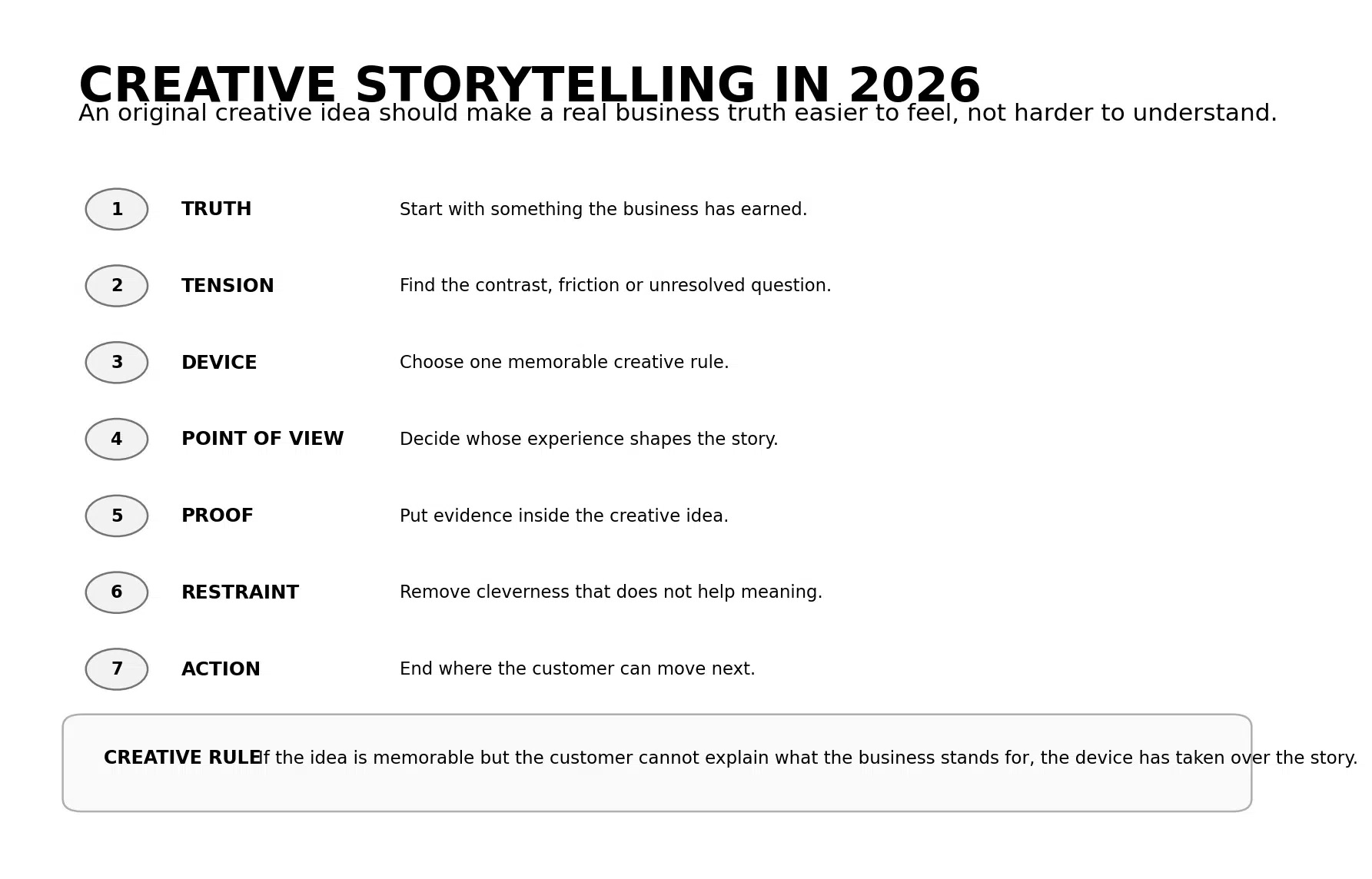
Figure 1. Seven principles of creative storytelling: truth, tension, device, point of view, proof, restraint and action.
Creative Storytelling Matters More as Production Gets Easier
AI has made it easier to create attractive media. That makes the creative idea more valuable, not less.
A useful example appeared in late August. Creative Bloq profiled indie developer HaZ Dulull's adaptation of Astro Burn from a pixel-art game into a 10-episode vertical mini-series. AI supported the animation workflow, but the project remained deliberately human-led. The team used human writers, voice actors and human-composed music, while the visual model was trained around the creator's own game assets to protect the source identity.
That detail matters. The production method changed. The creative ownership did not.
The creative idea was not 'use AI to make a show.' The creative idea was to reinterpret an existing story world for a different viewing behavior while preserving what made that world recognizable.
The same week gave marketers a larger example of idea-first creative design. MediaPost reported on Amazon Ads' First Day Ready campaign, which connected creator-led stories, physical campus experiences, streaming and a live concert back to commerce. One campaign idea travelled through several media because each expression had a clear role.
Adobe is also changing the way creators direct AI. The Verge reported on Adobe's AI-assisted Photoshop editor, where users can mark up an image directly to show the model what should move, change or appear. The creative process becomes less about writing longer prompts and more about directing the composition.
For a small business, the lesson is simple: tools are getting better at execution. The advantage shifts to the part the tool does not know, which is why this specific business story deserves this specific creative treatment.
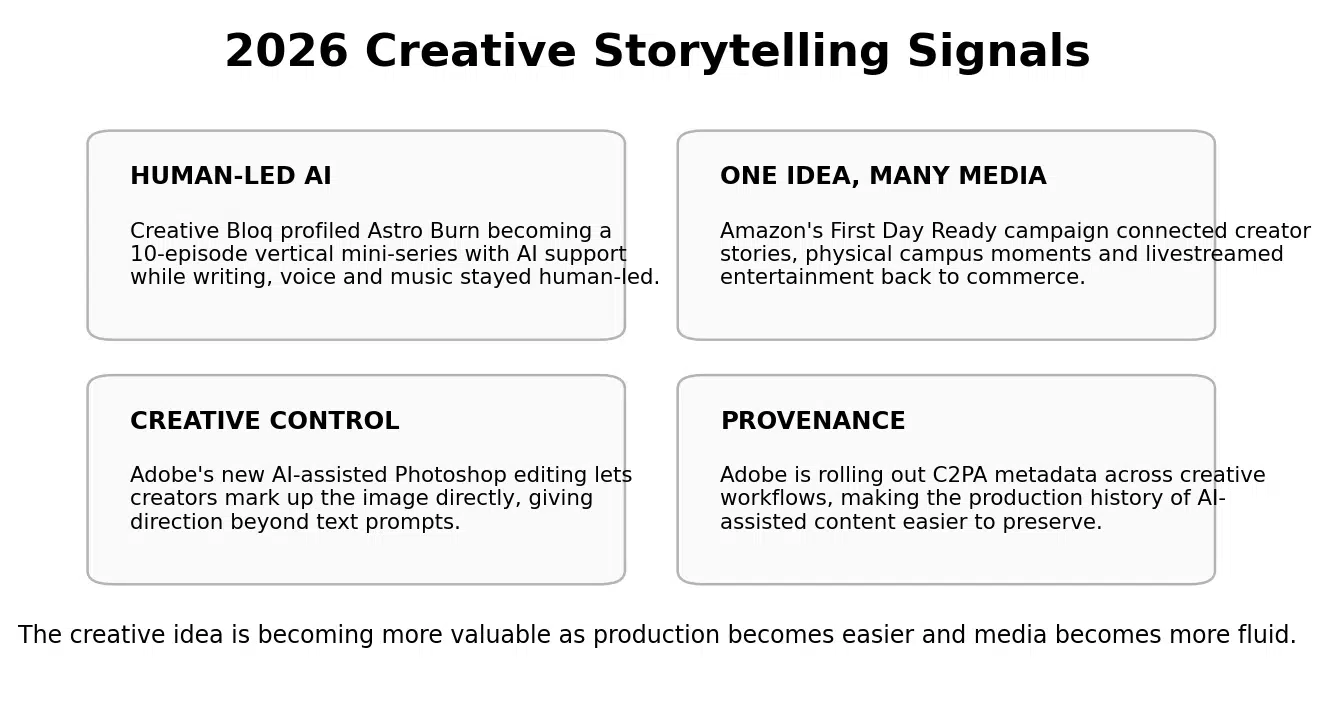
Figure 2. Four 2026 signals showing why creative direction becomes more important as AI expands production.
What Is Creative Storytelling?
Creative storytelling is the practice of expressing a real story through an original concept, structure, point of view, visual rule, metaphor or media device that makes the meaning more memorable without changing the truth.
The creativity is not the story itself. It is the way the story is revealed.
A bakery can tell a customer story through a conventional testimonial. Or it can build the story around the empty cake box that keeps returning to the same office every Friday. A jeweler can describe craftsmanship. Or it can follow one ring through the hands that sketch, shape, polish, gift and wear it. A real-estate agent can list neighborhood benefits. Or it can show one morning commute backwards from desk to front door to reveal what living closer changes.
Each creative device gives the audience a way into something true.
Creative storytelling vs. narrative storytelling
Narrative storytelling focuses on sequence, tension, change and meaning. Creative storytelling adds the device that makes that narrative distinctive. A before-and-after customer story is narrative. Telling that transformation through the changing contents of one handbag is a creative device.
Creative storytelling vs. visual storytelling
Visual storytelling uses composition, images, motion and design to create meaning. Creative storytelling can be visual, but it can also be written, audio-led, interactive or performative. The creativity sits in the idea, not only in the image.
Creative storytelling vs. brand storytelling
Brand storytelling defines the larger meaning a business wants to become known for. Creative storytelling gives that meaning a memorable expression. The same brand belief can produce many creative stories over time.
This is why Social Scion's storytelling marketing strategy guide begins with the business truth before the content calendar. Creative execution should make the source stronger, not replace it.
The Creative Device Framework
A useful creative idea is easier to build when the team separates the truth from the device.
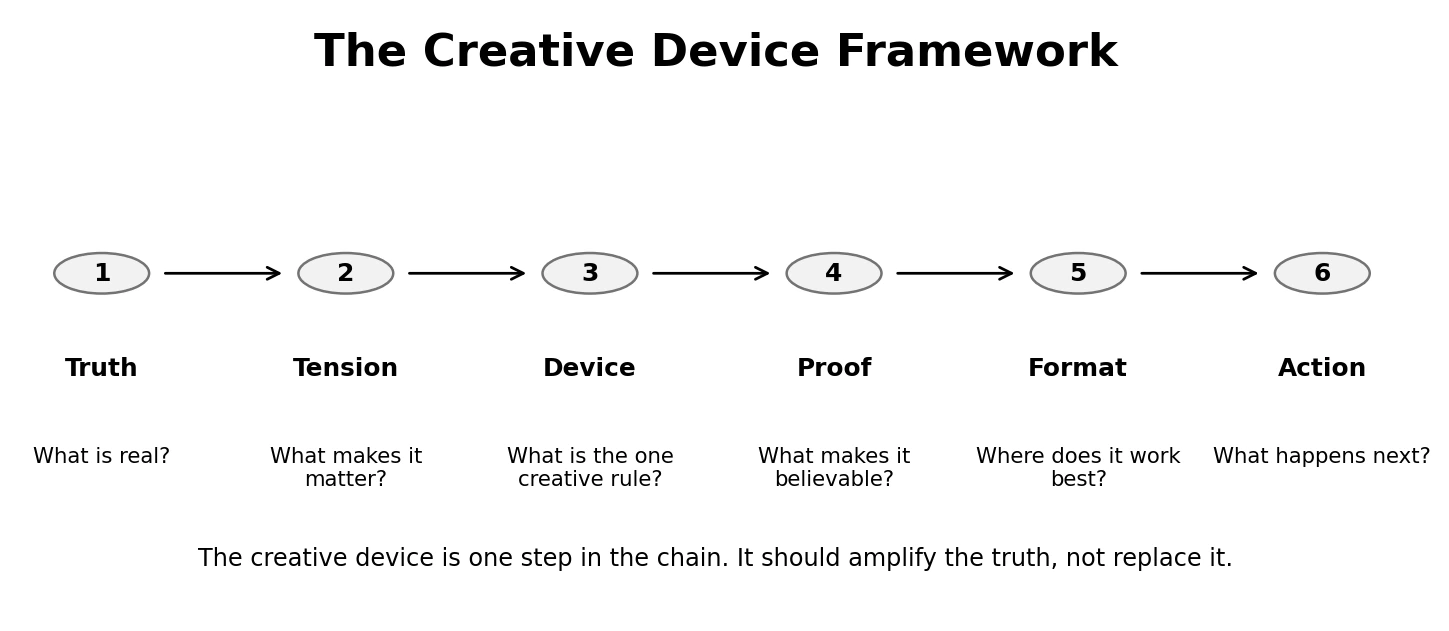
Figure 3. The Creative Device Framework connects truth, tension, device, proof, format and action.
1. Truth: start with something the business has earned
Use a real customer pattern, founder belief, product detail, service standard, operating choice or outcome. The most original-looking concept cannot compensate for a generic source.
2. Tension: find what makes the truth matter
Look for contrast. Fast versus careful. Seen versus ignored. Expensive-looking versus affordable. Complicated versus simple. Before versus after. The tension gives the creative idea energy.
3. Device: choose one memorable rule
The device can be a point of view, prop, repeated action, reverse chronology, one location, one question, one visual transformation or another simple creative constraint. One rule is usually stronger than five clever techniques.
4. Proof: place evidence inside the device
A creative story should still answer why the audience should believe it. Use real product behavior, customer language, process detail, result or source material inside the idea rather than attaching proof at the end as an afterthought.
5. Format: choose the medium that protects the device
Some concepts need film because movement is the idea. Others need audio because voice is the proof. Others need a sequence of still images because the repeated visual pattern creates the meaning.
6. Action: end where the customer can move
The story should create a useful next step, whether that is exploring the product, reading the case, claiming the Free Film, joining the list or booking a conversation.
|
The creative test If the audience remembers the device but cannot explain what the business does, believes or proves, the creative idea is carrying too much weight. |
|---|
7 Principles of Creative Storytelling
1. Originality starts with specificity
The fastest route to a generic creative concept is starting with a generic truth.
A wellness clinic saying 'we care about your wellbeing' has very little creative material. A clinic saying 'most of our new clients arrive after trying to fix the same problem alone for six months' has a story tension. The specificity gives the creative team something to build around.
2. Use one strong creative constraint
Constraints often make a story more inventive because they force choices. One room. One prop. One question. One camera position. One character. One day. One repeated phrase.
SubwayTakes works partly because the subway bench is a rule. The audience knows what kind of encounter is about to happen before hearing the take.
3. Give the audience a point of view
Creative storytelling becomes stronger when the audience experiences the story through a defined perspective.
A product story can be told from the founder's point of view, the customer's point of view, the product's journey, the employee who notices the problem first or the stranger encountering the brand for the first time. Point of view changes what gets shown and what gets left out.
4. Make the proof part of the idea
Proof should not feel like the legal disclaimer after the interesting part.
If the bakery's story is about freshness, the creative device can follow the same pastry from oven to box to customer hand within one morning. If the service claims speed, show the sequence that makes speed possible. The evidence becomes the plot.
5. Use surprise to reveal truth, not distract from it
A reversal, visual metaphor or unusual setting can create attention. It should also make the truth easier to see.
A surprising idea that has no relationship to the business can create recognition without relevance. Creative storytelling is strongest when the audience thinks, 'I did not expect that, but now the point is clearer.'
6. Remove what the story does not need
Creativity often improves during subtraction.
Remove the second metaphor. Remove the extra character. Remove the camera move that exists only because the model can generate it. Remove the clever line that competes with the proof. Restraint protects the core device.
7. Build for recall, not just reaction
A creative story should leave the audience with something the brand can own over time: a recurring device, phrase, character, visual rule, customer tension or belief.
The goal is not to make one post feel inventive. It is to build recognition that compounds across several stories.
3 Tools for Creative Planning, Storyboarding and Visualization
The most useful creative tools sit at different moments in the process. Milanote is useful before the idea is fixed. Boords is useful when the idea needs to become an approved shot sequence. Runway is useful when the concept needs a visual prototype or generated footage.
|
Tool |
Best creative job |
Current pricing |
Review signal |
Strength |
Tradeoff |
|---|---|---|---|---|---|
|
Milanote |
Moodboards, references, briefs and idea development |
Free; Pro $9.99/month annual or $12.50 monthly |
G2 4.5/5 · 43 reviews |
Flexible visual boards for references, hierarchy, notes, video, audio and planning |
Free limits and lighter integrations can become restrictive |
|
Boords |
Script-to-storyboard, shot planning, client review and animatics |
Solo $39 monthly or $26 annual; Pro $75 monthly or $50 annual |
G2 seller 4.7/5 · 28 reviews |
Keeps scripts, storyboards, comments, versions and approvals in one pre-production workflow |
More useful for recurring production than occasional solo storyboards |
|
Runway |
Visual concepting and hard-to-film scene generation |
Free; Standard $15/month or $12 annual |
G2 review depth remains limited |
Fast visual prototyping, generated video and multiple model options |
Credits and failed generations can make experimentation expensive |
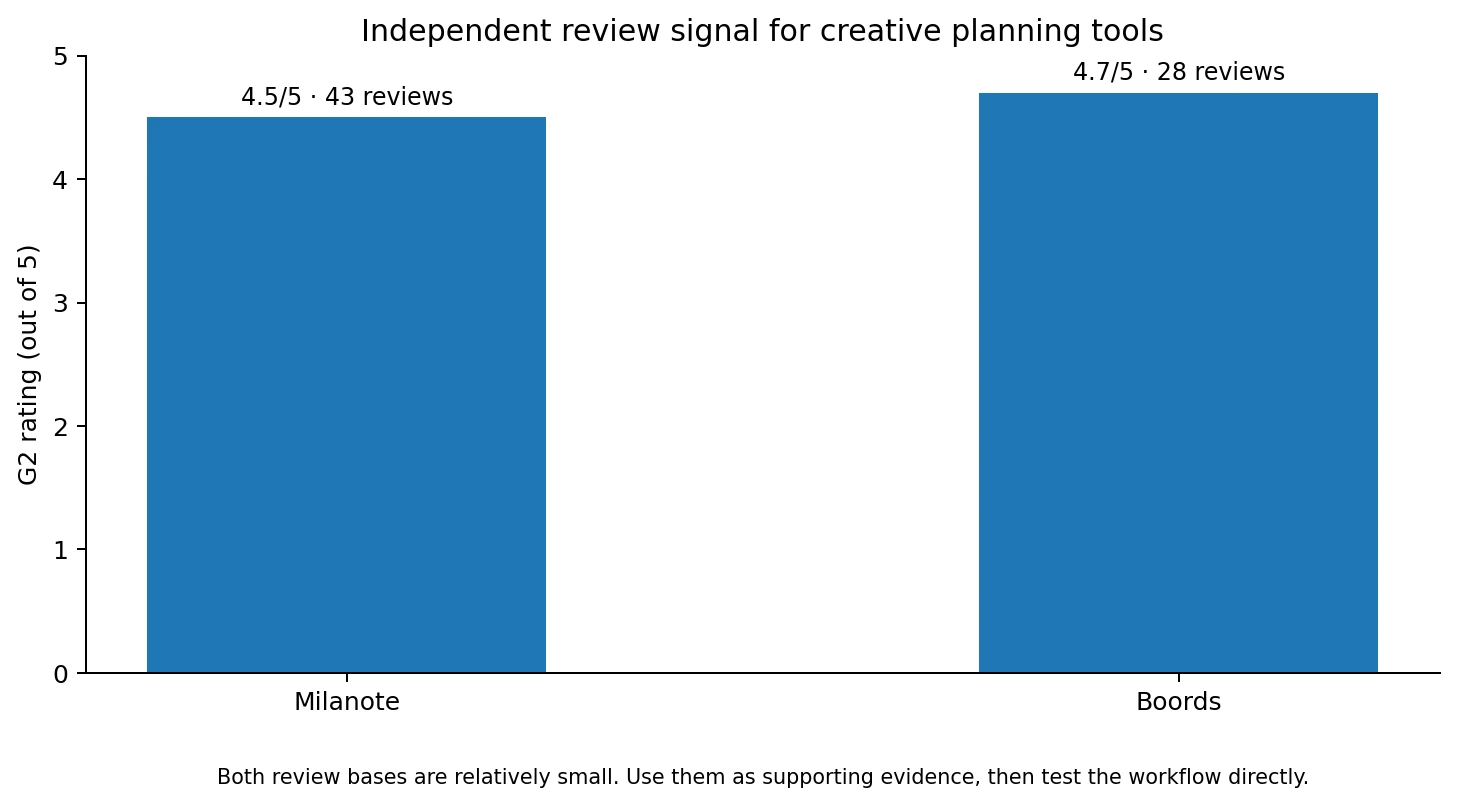
Figure 4. Independent review signal for Milanote and Boords. Both review bases are useful but relatively small.
Milanote: best before the concept is locked
Milanote is useful when the team needs to collect customer language, visual references, product detail, mood, examples and fragments of ideas without forcing them into a rigid document too early.
Its current pricing page offers a free plan with 100 notes, images or links and 10 file uploads. Pro costs $9.99 per month when billed annually or $12.50 monthly, with unlimited notes, file uploads and shared boards.
The Milanote G2 profile currently shows 4.5/5 with more than 40 reviews. Users frequently praise the visual interface, creative organization and flexible brainstorming. Free-plan limits and integration gaps appear among the tradeoffs.
Social Scion assessment: use Milanote to locate the creative idea, not to decorate an idea already chosen.
Boords: best when the concept needs to survive production
A strong creative idea can fail in production because nobody agreed on what each shot is supposed to do. Boords is designed to solve that handoff.
Its current pricing page lists Solo at $39 per month or $26 per month billed annually. Pro costs $75 monthly or $50 annually. Plans include scripts, storyboards, AI images, commenting, versioning, animatics and review features.
The Boords G2 seller profile currently shows 4.7/5 across 28 reviews. Reviewers emphasize faster pre-production, easier collaboration and cleaner feedback. The review base is still small enough that workflow testing matters more than the average rating.
Social Scion assessment: Boords is valuable when the creative device depends on shot order, client approval or several people interpreting the idea consistently.
Runway: best when the idea needs to become visible
Runway is useful after the creative logic exists. A visual metaphor, product transformation, impossible environment or recurring character can be prototyped before committing to a larger production.
The current Runway pricing page offers 125 one-time free credits. Standard costs $15 per month or $12 per month with annual billing and includes broader model access, 4K upscaling and watermark-free output.
Social Scion assessment: use Runway to visualize the device, not to discover the device by generating random attractive clips.
Where AI Helps Creative Storytelling, and Where It Should Stop
AI is strongest when it expands the number of ways a creative idea can be explored.
It can build rough visual references, create alternate compositions, test a prop or environment, summarize interview material, generate storyboard frames, translate the same concept into another production format or create supporting B-roll.
The risk begins when the tool starts filling the gaps where the business has not made a decision.
If the founder point of view is unclear, more prompts will not make it distinctive. If the proof is weak, a better camera move will not make the claim stronger. If the customer tension is generic, a surreal visual will not make the story specific.
Adobe's August 2026 transparency rollout is also relevant here. Adobe is adding C2PA metadata across supported AI-assisted creative workflows, helping preserve machine-readable provenance information as content moves through AI generation and editing. Provenance does not create creative integrity, but it can help document how the asset was made.
Human direction still has to decide why the asset should exist.
Example: A Jewelry Brand Turns Craftsmanship Into a Creative Device
Imagine a local jeweler whose strongest differentiator is that every custom piece passes through the same craftsperson from sketch to final polish.
The generic story is 'handcrafted jewelry.' The creative story needs a device.
One possible device is The Same Pair of Hands.
Truth: one craftsperson stays with the piece through the entire making process.
Tension: customers often see the finished object without seeing how much judgment happened before it.
Device: every scene returns to the same hands, but the object changes from paper sketch to wax to metal to stone setting to finished gift.
Proof: real tools, real process stages and the real finished piece appear inside the sequence.
Format: a 30-second cinematic film works because visible transformation is the argument.
Action: the film leads to a custom-design page showing how the consultation begins.
The creative idea is not separate from the proof. The proof is what makes the device work.
Practical Exercise: Find the Creative Device in 20 Minutes
Choose one customer truth and answer these questions without thinking about tools first:
What is true about this business that a competitor cannot claim honestly?
What is the tension or contrast inside that truth?
What object, place, action, point of view or repeated rule could make that tension visible?
What evidence must appear so the audience knows the idea is grounded in reality?
What could be removed from the concept without weakening the point?
Which medium protects the idea best?
What should the customer understand or do when the story ends?
Practical AI prompt: develop devices without inventing the business
|
Use verified source material only Generate five possible creative storytelling devices from the verified business truth below. Do not invent customer quotes, outcomes, prices, product features, founder history, emotions or evidence. For each concept provide: The five devices must be meaningfully different. Prefer simple creative rules that can be understood in one sentence. Then rank the five ideas by: If required source material is missing, mark it [NEEDS SOURCE]. Verified business truth: [paste source]. |
|---|
When Should You Pay for Creative Storytelling Tools?
Pay when the creative workflow repeats often enough that the tool removes friction between idea and approved production.
Use a visual planning workspace when references, customer language and creative briefs are scattered across too many documents.
Use dedicated storyboarding software when shot order, client approval, comments and versions create repeated pre-production delays.
Use a generative visual tool when prototypes or hard-to-film references regularly help the team approve the creative direction before full production.
Upgrade when the free plan is limiting a workflow that has already proved useful, not simply because the paid tier has more AI features.
Measure saved review time, avoided reshoots, fewer failed generations and faster approval rather than counting how many ideas the software can produce.
Common Creative Storytelling Mistakes
Starting with the visual effect
A visual can be beautiful and still have no relationship to the business truth. Start with the tension, then decide what visual rule expresses it.
Trying to be original before being specific
Specific customer language and process detail create more distinctive concepts than generic brainstorming prompts.
Using three creative devices in one story
One strong constraint is easier to understand and remember. Multiple metaphors can make the story feel designed instead of inevitable.
Hiding weak proof behind production value
Cinematic quality can make a claim feel important. It cannot make the claim true.
Choosing the trendy format instead of the right medium
A Reel, avatar or interactive effect should be used because it protects the idea, not because the format is currently popular.
Letting AI fill in the human reason
A model can suggest metaphors. It cannot know which founder experience, customer tension or business belief has been earned.
Making the concept impossible to repeat
A good creative device can often become a series. If every execution requires a completely new idea, the brand earns less recognition from the work.
Ending without a customer path
An inventive story still needs an owned next step. Creative recall is more valuable when it moves toward the product, page, booking or relationship.
FAQ: Creative Storytelling in 2026
What is creative storytelling?
Creative storytelling is the use of an original device, structure, point of view, metaphor or media rule to make a real story more memorable without changing its underlying truth.
What makes storytelling creative?
Specificity, tension, a strong point of view and one memorable creative constraint usually create more originality than adding more visual effects or complex plot.
How is creative storytelling different from narrative storytelling?
Narrative storytelling focuses on sequence, tension and change. Creative storytelling focuses on the distinctive device through which that narrative is experienced.
Can small businesses use creative storytelling?
Yes. Small businesses often have stronger raw material because the founder, process, customer language and local context are close to the work. One specific truth can produce a distinctive creative device without a large budget.
Can AI help with creative storytelling?
Yes. AI can organize research, generate creative alternatives, visualize ideas, build storyboard frames and produce supporting media. The business truth, proof, strategic choice and final creative direction should remain human-controlled.
What is a creative storytelling device?
A creative device is the simple rule through which the audience experiences the story. Examples include one recurring object, reverse chronology, one location, a repeated question, a point-of-view camera or a visual transformation.
What tools help with creative storytelling?
Milanote is useful for visual planning and moodboards, Boords for scripts and storyboards, and Runway for visual prototyping or generated scenes. The right tool depends on the stage of the creative workflow.
How do you know if a creative idea is too gimmicky?
Remove the device mentally. If the underlying business truth is weak, the idea is probably depending on novelty. A good device makes the truth clearer, not less important.
Should one creative story work across every channel?
The core idea can travel, but each medium should adapt the expression. A cinematic film, social cut, email and website case can all use the same creative device at different levels of depth.
How do you measure creative storytelling?
Measure both recall and business movement. Attention, completion, shares and comments can show resonance, while product-page visits, lead capture, bookings or sales show whether the story moved the right customer.
The 2026 Stance: Creative Storytelling Is the Human Layer AI Cannot Automate
AI can generate more visual possibilities than a small creative team could explore a few years ago.
That changes the economics of production. It does not remove the need for an idea worth producing.
The creative advantage is moving upstream.
The business needs to know the truth it has earned, the tension inside that truth and the one creative device that makes it easier for a stranger to feel. Then AI can help visualize, storyboard, generate, edit and adapt.
The order matters.
Human intelligence finds the story. Creative direction chooses the device. AI expands the canvas.
That is how creative storytelling stays original even when production becomes abundant.
Your Business Already Has the Raw Material for a Creative Story
The strongest idea may already be hiding inside a repeated customer question, a product detail, a founder habit, a service ritual or a piece of proof nobody has made visible yet.
Social Scion AI starts by locating that truth, then builds the cinematic or AI-native creative device around what the customer should notice, feel and do next.
|
Get your Free Film See what happens when the creative idea is built from the real business story first. Claim the Free Film Story that attracts. System that converts. |
|---|
Sources
Creative Bloq: Astro Burn human-led AI adaptation
MediaPost: Amazon First Day Ready campaign
The Verge: Adobe AI Assisted Editor
Adobe AI content transparency and C2PA
Related reading
How to Build a Storytelling Marketing Strategy in 2026


0 conversations